Spatial Lifecourse Health
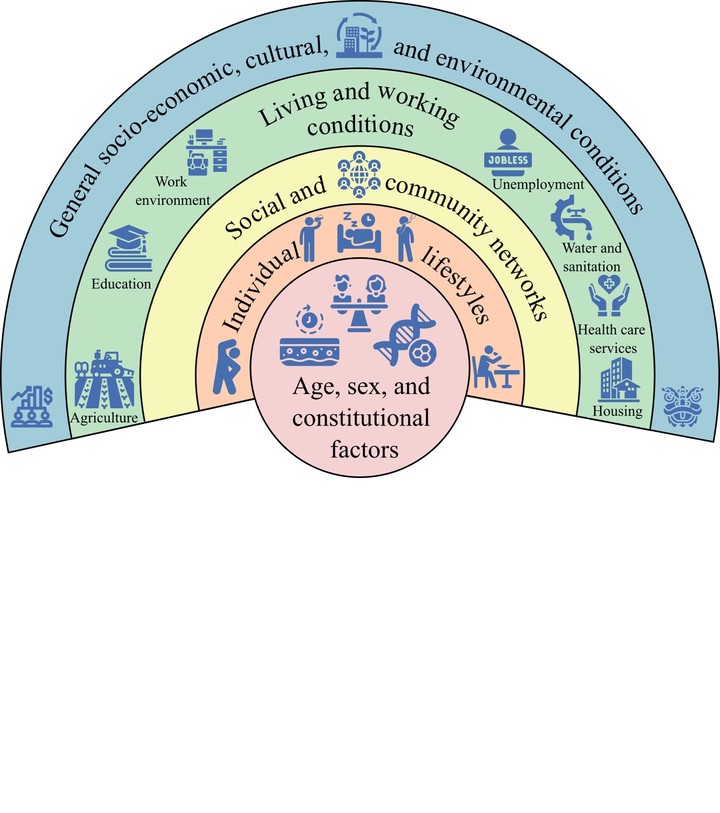
Spatial Lifecourse Health was proposed by my supervisor, Prof. Peng Jia in Lancet Planetary Health. It is an emerging framework that integrates life-course theory with spatial thinking to understand how places shape health across the life span, and it is now also applied to infectious diseases such as the COVID-19 pandemic. The top 10 research priorities in spatial lifecourse epidemiology and the ISLE-ReSt reporting standards have been published to guide this field. My PhD project applies Earth observation (Google Earth Engine), geospatial big data (street view image segmentation), and spatial statistical models to health geography and spatial epidemiology, covering obesity, infectious diseases, non-communicable diseases, and air pollution exposure.
1 Obesity and obesogenic environments
We conducted a series of systematic reviews in Obesity Reviews to determine all the obesogenic environmental factors of childhood obesity, covering the natural environment, green space, bike lanes, and speed limits, and further proposed a framework connecting built environments at different geographic contexts—residences, commute routes, and workplaces—with obesity.
The framework paper was published in The Lancet Global Health, and the residence–commute–workplace study was published in Cities
2 COVID-19 pandemic
The COVID-19 pandemic became a natural laboratory for spatial lifecourse health. I built Awesome of COVID-19, a website collecting COVID-19 research resources, and developed a COVID-19 shiny app for spatiotemporal visualization.

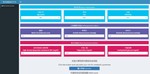
Figure 1. Snapshot of the website “Awesome of COVID-19”.

Figure 2. Snapshot of the COVID-19 shiny app.
We also raised awareness of reverse zoonoses (i.e., human–animal transmission of COVID-19), calling for up-to-date methods to improve the control, management, and prevention of cross-species transmission at both individual and regional/national levels.

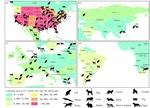
Figure 3. COVID-19 natural infections of pet, zoo, and livestock animals as of 11 March 2021, mapped onto the number of confirmed human cases.
Trends论文献策疫情中被忽视的“人-动物”感染风险 | Cell Press论文速递
The paper was published in Trends in Ecology & Evolution, and the heterogeneous impacts study was published in Landscape Ecology
Our contributions to COVID-19 epidemic prevention and control were also recognized by the Health Commission of Tumot Left Banner, Inner Mongolia.

Figure 4. The certificate of outstanding contributions to COVID-19 epidemic prevention and control.
3 Health effects of air pollution exposure
Based on the daily 1-km PM2.5 mapping products, we evaluated the short-term health effects of PM2.5 exposure during the Spring Festival in 25 Yangtze River Delta cities using the attributable fraction (AF) and OD matrices, and further extended the exposure–health chain to long-term chemical constituents and diabesity risks in a national cohort, as well as real-time blood pressure responses measured by wearables.

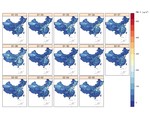
Figure 5. The time variation and OD matrices of AF.
【建成环境与行为研究】春节期间的PM2.5污染短期暴露健康效应评估——以长三角地区25个城市为例 | 上海城市规划
The cohort study was published in The Lancet Regional Health – Western Pacific, and the wearable study was published in Journal of Urban Health
4 Built environment auditing and physical activity assessment
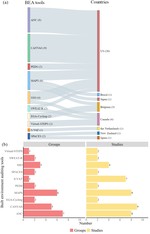
Street view imagery makes it possible to audit built environments at eye level. Through a systematic review of SVI-based built environment auditing tools, we synthesized the audited attributes, the detection models behind them, and their reliability across countries and research groups, and identified standardized tools (such as ANC and MAPS) as the most widely accepted auditing instruments.

Figure 6. An overview of the studies using different built environment auditing tools in different countries, (a) represents the number of these tools within different countries (in parentheses), (b) represents the number of these tools that have been applied by different groups and in various studies.
The review was published in IJGIS
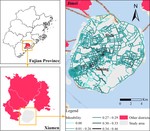
We further developed a bikeability evaluation framework by fusing multi-source spatiotemporal big data, revealing the daily and hourly dynamics of cycling friendliness on Xiamen Island.

Figure 7. The proposed bikeability framework.

Figure 8. Average bikeability of Xiamen Island on December 21st, 22nd, 23rd, 24th, and 25th, 2020; the roads highlighted in red indicate lower levels of bikeability, whereas those in green indicate higher levels.

Figure 9. Average bikeability of Xiamen Island at 6:00, 7:00, 8:00, and 9:00 a.m.
《Int J Appl Earth Obs》发文:基于多源地理空间大数据的时空自行车可行性评估
The paper was published in International Journal of Applied Earth Observation and Geoinformation
5 Population and demographic mapping
Fine-scale population structure is the foundation of exposure and health assessment. We developed a contextualized geographically weighted neural network (CGWNN) for high-resolution population density mapping, and further estimated complete sex and age structures on 100 m grid cells by fusing census data, remote sensing imagery, and geotagged social media data with a multi-output random forest model.

Figure 10. Demographic composition data coverage and the distribution of geotagged social media data in Chengdu City.
The CGWNN paper was published in Applied Geography, and the demographic composition mapping was published in IJGIS

Shaoqing Dai
Postdoc
Publications
High-resolution mapping of demographic compositions based on remote sensing and social media data: a multimodal, multi-output modeling approach
The evaluation of health effect of short-term exposure to PM2.5 during spring festival: a case study of 25 cities in the Yangtze Diver Delta
Effects of Short-Term Exposure to Air Pollutants on Real-Time Blood Pressure: A Wearable Device-Based Study in China
High-resolution population density mapping in urban areas using a contextualized geographically weighted neural network (CGWNN) model
Built environments and obesity: A framework considering residences, commute routes, and workplaces
Heterogeneous impacts of and vulnerabilities to the COVID-19 pandemic
Improving obesogenic environmental assessments with advanced geospatial methods
Long-term exposure to PM2.5 chemical constituents and diabesity: evidence from a multi-center cohort study in China
Street view imagery-based built environment auditing tools: a systematic review
Spatiotemporal patterns of air pollutants over the epidemic course: a national study in China
State of the Art of Lifecourse Cohort Establishment
Mixed land use has opposite associations with subjective well-being through social capital: Spatial heterogeneity in residential and workplace neighborhoods
Assessing spatiotemporal bikeability using multi-source geospatial big data: A case study of Xiamen, China
Development and validation of an age-sex-ethnicity-specific metabolic syndrome score in the Chinese adults
Environmental determinants of childhood obesity: a meta-analysis
Global spreading of Omicron variant of COVID-19
Assessing bicycle-sharing riding friendliness by fusing multi-source heterogeneous spatio-temporal big data
Identification of two-dimensional copper signatures in human blood for bladder cancer with machine learning
Assessing riding friendliness by fusing multi-source heterogeneous spatio-temporal big data
New Approaches to Anticipate the Risk of Reverse Zoonosis
Pitfalls in Modeling Asymptomatic COVID-19 Infection
The direct and interactive impacts of hydrological factors on bacillary dysentery across different geographical regions in central China
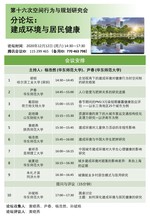
The Evaluation of Health Effect of Short-term Exposure to PM2.5 during Spring Festival: A Case Study of 25 Cities in the Yangtze River Delta(Chinese)
Natural environment and childhood obesity: A systematic review
Green space access in the neighbourhood and childhood obesity
Neighbourhood speed limit and childhood obesity
Access to bike lanes and childhood obesity: A systematic review and meta‐analysis
Talks
Sensing healthy city: from multimodal geographic data, GeoAI to causal inference
Sensing healthy city: from multimodal geographic data, GeoAI to causal inference
Obesogenic environment sensing based on multimodal data and GeoAI
Sensing healthy city based on multimodal data and GeoAI
Toward health geography: from the COVID-19 pandemic to Health China

Sensing healthy city based on multimodal data and GeoAI
Sensing healthy city based on street view imagery and GeoAI
Application of night light remote sensing data in urban studies
Sensing healthy city based on street view imagery and GeoAI
Sensing healthy city based on street view imagery and GeoAI
Sensing healthy city based on street view imagery and GeoAI

The impact assessment of urban built environment on carbon-air-health nexus: a lifecourse perspective

Development of the frequently used built environmental auditing and simulation tools in health domain
Development of the frequently used environmental exposome observation tools in health domain
Bridging environment and human health, from earth observation to human-center observation
Assessment of physical activity opportunities based on multi-source geospatial data
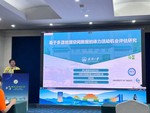
The frequently used built environmental auditing tools in the health domain
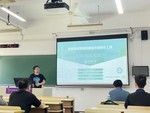
Health geography studies based on spatial lifecourse epidemiology framework
Seeking your interest and going ahead will contribute to success
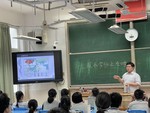
Do neighborhood boundaries matter for examining the associations between environmental factors and obesity
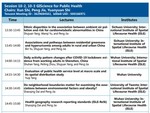
The Evaluation of Health Effect of Short-term Exposure to PM2.5 during Spring Festival: A Case Study of 25 Cities in the Yangtze River Delta(Chinese)
What is geography? From coronavirus disease 2019 to Bei Dou Systems